
Short answer: check your weatherstripping, test your springs, and lubricate moving parts before the first hard freeze
If you only do three things before winter sets in, do those. Cold snaps in this part of Delaware tend to arrive fast, often after a stretch of heavy autumn rain, and that combination of moisture followed by freezing temperatures is what causes most of the garage door problems homeowners deal with between November and February. The good news is that none of this requires special tools, and most of it takes less than an hour on a mild weekend afternoon.
Why cold and rain are a rough combination for garage doors here
Newark winters swing between icy mornings and messy, wet weeks, sometimes within the same seven days. Water gets into gaps, hinges, and track channels during rain, then freezes overnight, which stiffens metal, swells wood panels, and makes rubber seals brittle. Homes in this area range from older construction with original hardware to newer builds with modern steel doors, and both have winter weak points: older doors often have worn weatherstripping and sagging panels, while newer doors can still suffer from under-lubricated rollers and openers that haven't been serviced since installation.
1. Inspect and replace weatherstripping
The rubber seal along the bottom of the door and the vinyl strips along the sides are your first line of defense against wind-driven rain and cold air. Over a humid summer, this material can crack, flatten, or pull away from the track. Run your hand along the bottom seal — if it feels stiff, cracked, or doesn't sit flush against the concrete, replace it before winter. A gap as small as a quarter inch along the bottom can let in enough cold air to freeze condensation inside the garage, which is a common reason doors stick to the floor on icy mornings.
2. Test the springs, but don't touch them
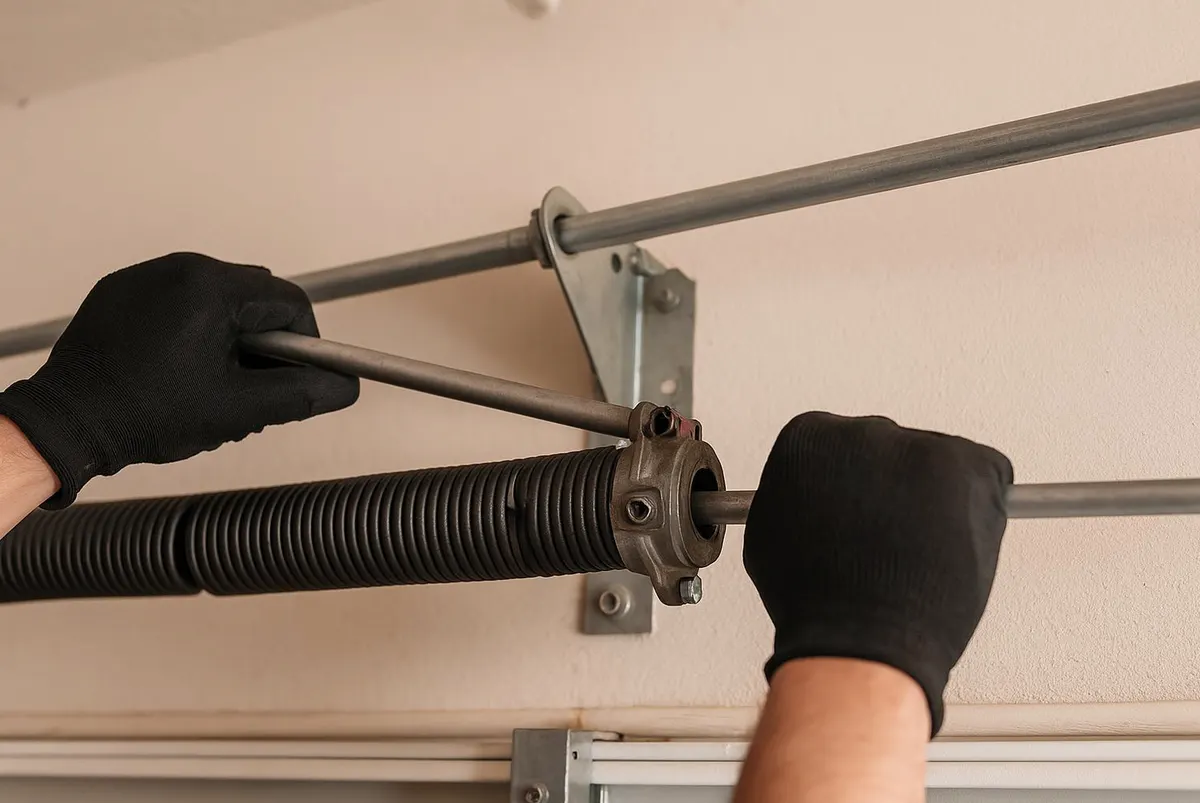
Cold weather makes steel more brittle, and torsion or extension springs that have been quietly wearing out all year are far more likely to snap once temperatures drop. You can test for wear without touching the springs: disconnect the opener by pulling the release cord, then lift the door manually. It should move smoothly and hold its position about halfway up. If it feels heavy, drops on its own, or you hear a grinding or popping sound, the springs are likely fatigued. Springs are under serious tension and are not a do-it-yourself repair — this is one of the few garage door jobs where calling a professional isn't optional, it's a safety issue.
3. Lubricate hinges, rollers, and tracks
Rollers, hinges, and the track itself need a fresh coat of garage-door-specific lithium or silicone lubricant before the cold sets in. Avoid WD-40 as a long-term lubricant — it displaces moisture short-term but doesn't hold up in freezing conditions and can attract grit. Wipe down the tracks first to remove summer dust and pollen buildup, then apply lubricant to every moving joint. This single step cuts down on the grinding, jerking motion that's common on doors that haven't been serviced heading into winter.
4. Check the opener and safety sensors
Cold weather slows the chemical reactions in opener motors and batteries, which is why garage doors sometimes feel sluggish or unresponsive on the coldest days. Clean the photo-eye sensors near the bottom of the track with a soft cloth — a buildup of road salt residue or condensation here can cause the door to reverse unexpectedly or refuse to close. If you have a battery backup on your opener, test it now rather than during a power outage from a winter storm.
5. Look at panel seams and bottom corners
Heavy rain finds every weak seam, and once that water freezes, it can expand small cracks into bigger ones overnight. Walk around the door and check the corners and seams for warping, rust spots, or separation, especially on older wood-composite doors. These are easy to miss in summer but become obvious once ice starts forming in the gaps.
6. Consider insulation if your garage isn't heated
If your garage shares a wall with living space, or you store anything that can't handle freezing temperatures, an uninsulated door is worth addressing before winter. Insulated doors and retrofit insulation kits trade a modest upfront cost for a noticeably warmer garage and less temperature swing on the wall it borders. It's not a requirement for every home, but it's a reasonable upgrade if you've noticed frost forming on the inside of the door during cold snaps.
Warning signs you shouldn't wait on
- The door reverses or stops partway through closing
- You hear new grinding, popping, or scraping sounds
- The door is noticeably heavier to lift by hand than it used to be
- Visible gaps of daylight along the bottom or sides when closed
- Ice forming on the inside of the door or around the track
Any of these can go from a minor annoyance to a stuck or broken door during the first real cold snap, usually at the worst possible time.
When to call Newark Door & Opener
If your spring test showed resistance or unevenness, or your door is sticking, sagging, or making new noises, that's the point to bring in a professional rather than keep adjusting things yourself. Our Spring Replacement service handles worn torsion and extension springs safely, and our Maintenance & Tune-Up visits cover a full inspection of rollers, tracks, hardware, and opener settings so small issues get caught before a hard freeze turns them into a no-go door on a Monday morning.
If you're in Newark, Wilmington, Bear, Hockessin, Pike Creek, Elkton, New Castle, or Middletown and want your garage door checked out before winter really sets in, give Newark Door & Opener a call. We're right on Kirkwood Highway and happy to get your door ready for whatever this season brings.