
The short answer
Your garage door is almost certainly the weakest point in your home's exterior wall. It's the largest moving opening in the structure, built from lighter materials than the walls around it, and held in place by hardware that wasn't designed to fight wind pressure on its own. When a storm pushes hard enough, the door is usually the first thing to give — and once it fails, wind gets inside the garage and starts pushing up on the roof from underneath, which is how a storm turns a bent panel into a much bigger repair. Reinforcing the door before severe weather arrives is one of the most overlooked pieces of home storm prep.
Why this matters more going into winter
This area moves from humid summers into a stretch of heavy rain, occasional coastal storms, and icy winters, and that combination is hard on garage doors in different ways. Rain and wind-driven storms test the door's structural integrity and seals. Ice and freezing temperatures stiffen weatherstripping, slow springs, and can freeze a door to the slab overnight. A door that handled summer thunderstorms fine can still struggle once wind gusts arrive alongside near-freezing temperatures, because cold metal and cold lubricant both behave differently under load.
How a garage door actually fails in wind
Most garage doors aren't engineered the same way as the wall studs around them. Wind doesn't just push on the door — it creates pressure differences as it moves around the house, and a standard residential door can flex, bow, or pop off its track under sustained gusts. Once that happens, wind pressure inside the garage has nowhere to go but up against the roof deck and out against the walls. This is the mechanism behind a lot of storm damage that looks unrelated to the garage at first glance: a door failure upstream, roof or wall damage downstream.
Homes with older, single-layer steel doors or doors without reinforcing struts are more exposed to this. So are doors with worn rollers, loose track bolts, or hinges that have been quietly degrading for a few seasons without anyone noticing, since none of those symptoms stop the door from opening and closing normally right up until the day they don't.
Signs your door isn't ready for storm season
- Visible daylight around the edges of a closed door, which means wind and water can get in the same way light does.
- A track that looks slightly bowed or has gaps where the rollers sit, even if the door still opens.
- Panels that flex or drum noticeably when you push on them from outside.
- Worn or cracked weatherstripping along the bottom and sides, common after a few humid summers in a row.
- An opener with no battery backup, which matters when coastal storms knock out power and you need the door operable, or securely closed, during an outage.
Concrete steps before the next storm
- Check and tighten track hardware. Loose bolts at the brackets are one of the most common reasons a door comes off its track under wind load. This takes a wrench and ten minutes, not a specialist, but it's worth doing before December weather sets in.
- Inspect rollers and hinges. Metal rollers that are chipped, or nylon rollers that are cracked, reduce the door's ability to stay seated under pressure. Replace rather than wait once you see cracking.
- Add or verify reinforcing struts. Many retrofit kits brace horizontally across the door's panels and significantly reduce how much a door can bow under wind. This matters most for older single-layer steel doors common in the mix of older housing stock in this area.
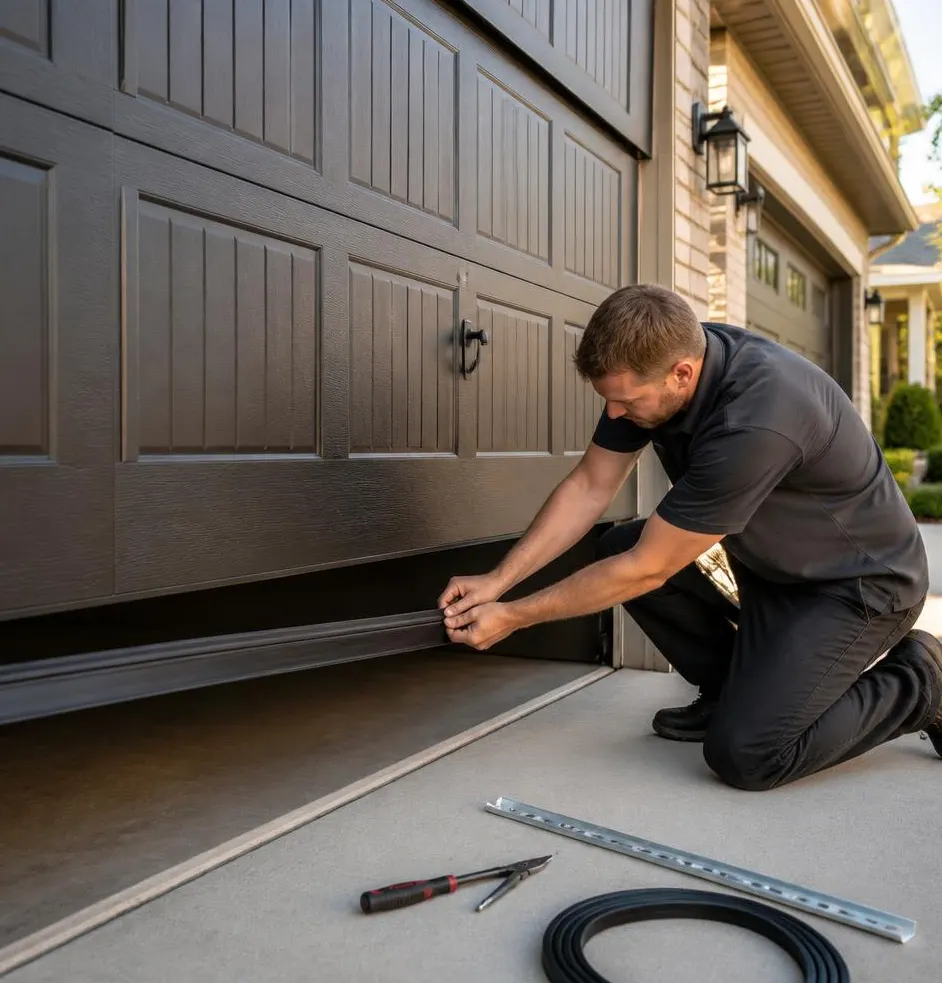
- Reseal the bottom and sides. Fresh weatherstripping handles both the heavy rain this region gets and the cold air infiltration that follows once temperatures drop.
- Lubricate moving parts with a product rated for cold weather. Standard household oil thickens in freezing temperatures; a silicone-based lubricant keeps springs and rollers moving smoothly once icy mornings arrive.
- Test the auto-reverse safety feature. This isn't storm-specific, but a door that doesn't reverse properly is also a door with worn components that are more likely to fail under added wind stress.
- Clear drainage near the garage slab. Heavy rain pooling at the base of the door accelerates rust on tracks and hardware, which weakens the whole system before a storm ever arrives.
Older homes vs. newer construction
Older homes in the area often have doors and openers that predate current wind-resistance standards, meaning the door itself may simply not be built to handle sustained gusts the way newer doors are. Newer construction tends to have better-engineered doors, but homeowners sometimes skip adding battery backup to the opener, which becomes a real gap during a coastal storm that knocks out power for hours. Either way, the fix is rarely about replacing everything at once — it's about identifying which specific weak point your door has and addressing that one first.
When to call Newark Door & Opener
If your door shows visible flex, a bowed track, or has never been reinforced, that's worth a professional look before storm season rather than after a failure. Our Maintenance & Tune-Ups service covers the full inspection — track alignment, roller and hinge condition, weatherstripping, and spring tension — and catches the small issues before wind turns them into bigger ones. If a door has already shifted off its track or won't seat properly, our Off-Track Door Repair service gets it back into working, storm-ready condition rather than leaving it as a vulnerable point in the wall.
If you're in Newark, Wilmington, Bear, Hockessin, Pike Creek, New Castle, Middletown, or Elkton and want your garage door checked before the next storm rolls through, call Newark Door & Opener on Kirkwood Highway and get it handled now, while the weather still allows it.