
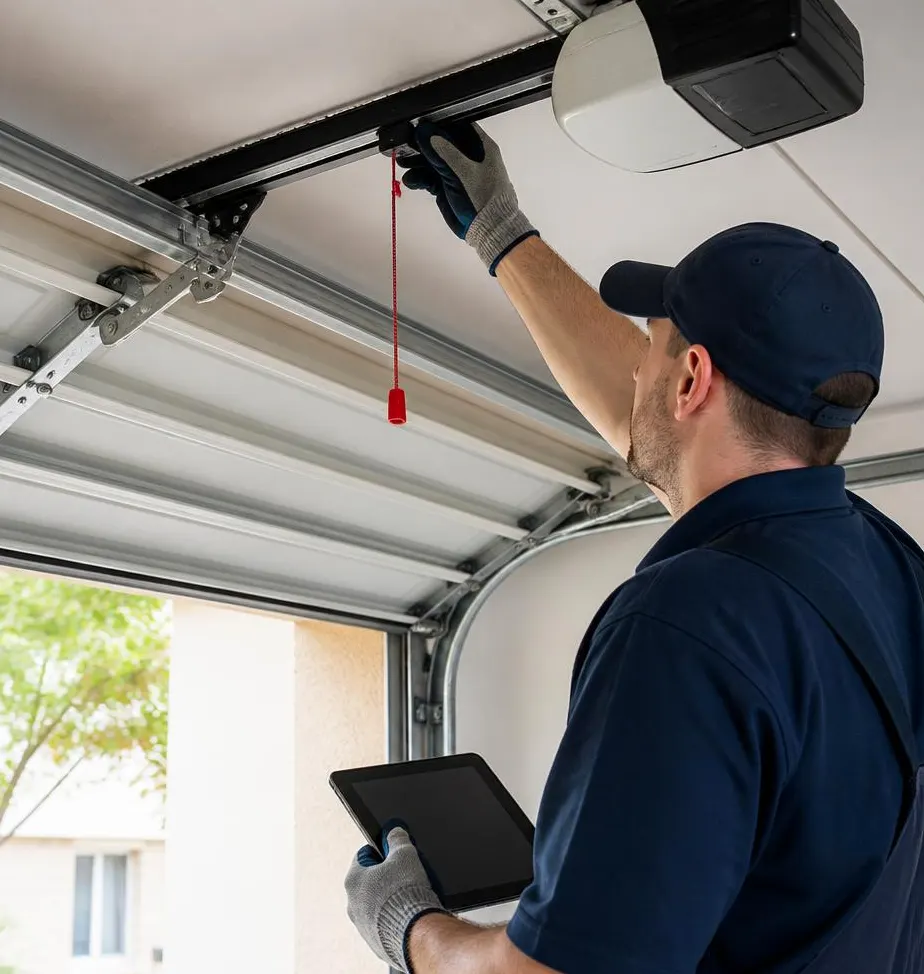
What a Technician Sees on a Typical Material Call
Most calls about garage door material don't start with a homeowner asking "what should I buy?" They start with a door that's already failing. A tech shows up to a bottom panel bubbling on a steel door that's been sitting in standing water after heavy rain. Or a wood door with a swollen, sticky section near the weatherstripping that won't seal anymore. Or an aluminum door with a dent the size of a basketball from a wind-blown trash can during a coastal storm. By the time someone calls, they've usually already decided the old door's material wasn't the right fit for this area — they just don't know what to replace it with.
Newark sees a real mix: humid, sticky summers that invite moisture and mildew, icy winters that stress hardware and seals, heavy rain that tests drainage and rust resistance, and older homes alongside new construction with very different garage openings and styles. The right material depends on which of those factors matters most for a given house.
Steel
Steel is the standard for a reason. It's affordable, comes in a wide range of styles, and holds up well structurally against wind and impact when it's a quality gauge. Insulated steel doors (two layers of steel with foam in between) handle temperature swings well, which matters when a garage sits right next to living space.
The trade-off: steel rusts if the finish gets scratched and isn't touched up, and exposed bottom corners near a driveway that pools water are the first place it shows. Lower-gauge steel doors can also dent from hail or a stray baseball. For most homes here, a mid-to-heavier gauge steel door with a factory-baked finish is a safe, durable choice.
Wood
Wood is still the look a lot of older Newark homes call for — a carriage-style wood door suits a lot of the character housing stock in this area in a way steel alone can't quite match. It's also naturally insulating and easy to repaint if you want to change the color down the road.
The trade-off is maintenance, and it's not small. Humid summers plus heavy rain are a rough combination for real wood: panels swell, joints loosen, and finish needs to be reapplied every few years or rot sets in, especially at the bottom rail where splash-back from rain collects. Wood also isn't ideal left unprotected through an icy winter if the finish has worn thin. If you want the wood look without the upkeep, that's where composite comes in.
Aluminum
Aluminum is light, which makes it easy on openers and hardware, and it doesn't rust — a real advantage during wet winters and humid summers. It's often used in doors with large glass panel sections for a more modern look.
The downside is durability against impact. Aluminum dents more easily than steel, and once it's dented, it's harder to pull back into shape. In a storm with debris, or on a door that gets bumped by a car bumper or bike, aluminum shows damage faster than steel will. It's a reasonable choice for a detached garage that doesn't take much abuse, but less ideal as the only door protecting an attached garage through nor'easter season.
Fiberglass
Fiberglass doors resist denting, won't rust, and hold up well in humidity since they don't absorb moisture the way wood does. They can also be molded to mimic a wood grain look.
The trade-off is cold tolerance: fiberglass can become brittle and crack in sustained freezing temperatures, which matters here given how icy winters in this area can get. It also tends to fade with long sun exposure over the years. It's a decent option for a garage that isn't fully exposed to direct winter weather, but it's not usually the top pick for a Delaware winter.
Composite (Wood Composite / Overlay)
Composite doors are built to give you the wood look with less of the wood problem. A composite overlay on a steel frame resists rot, doesn't swell in humidity, and holds paint and stain better over time than solid wood. For homes that want a carriage-style look without repainting every couple of years, this is usually the better route than real wood.
The trade-off is cost — composite doors typically sit at the higher end of the price range — and the look isn't quite identical to solid wood grain up close. For most buyers chasing the aesthetic without the maintenance, that trade is worth it.
What We'd Recommend for a Typical Newark Home
For most homes in Newark, Bear, Pike Creek, and the surrounding area — a mix of attached garages, older housing stock, and driveways that see plenty of rain runoff — an insulated steel door with a quality factory finish is the most balanced choice. It handles icy winters, resists the dents that come with occasional storms, and doesn't demand the upkeep wood requires. If the home's style calls for a wood look, a composite overlay door gets you there without the rot risk. Aluminum and fiberglass both have a place, but usually as a secondary garage or a lower-exposure situation rather than the main door taking the brunt of Delaware weather.
When to Call Newark Door & Opener
If your current door is showing rust at the bottom panel, swelling at the seams, or dents that keep it from sealing properly, it's worth a look before another freeze-thaw cycle makes it worse. Newark Door & Opener handles full garage door installation and can walk through material options against your home's actual exposure — sun, rain runoff, wind — rather than guessing. If the door itself is fine but the opener or hardware is struggling, we also handle opener installation and repair so you're not replacing more than you need to.
If you're weighing materials for a replacement or just want an honest read on what your current door can still handle, call Newark Door & Opener on Kirkwood Highway — we serve Newark, DE and the surrounding communities and can give you a straight answer before winter sets in.